
What does SEND mean?
A child or young person aged from 0 to 25 years has special educational needs or disability (SEND) if they:
- have a learning difficulty or disability which makes it much harder for them to learn than other pupils of the same age
- they require special educational provision to be made for them
- SEND is a legal term. A detailed description can be found in the SEND Code of Practice (SEN on page 15 and Disability on page 16). Or you can read the easy-read version of the SEND Code of Practice from Mencap.
Different types of special educational needs or disability (SEND)
Children with SEND may need extra help or support, or special provision made for them to have the same opportunities of other children of their age.
The 4 areas of need according to the SEND Code of Practice
If your child has a SEND, their needs will fall into one or more of the following 4 areas. To find out more about each area of needs, what support Highwood provides and how to support at home, please click below.
Cognition and Learning

Children and young people might:
- learn at a slower pace than others
- find the curriculum difficult
- struggle with organisation and memory
- have a specific difficulty, for example, in literacy or numeracy
Support for learning difficulties may be required when children and young people learn at a slower pace than their peers, even with appropriate differentiation. Learning difficulties cover a wide range of needs, including moderate learning difficulties (MLD), severe learning difficulties (SLD), where children are likely to need support in all areas of the curriculum and associated difficulties with mobility and communication, through to profound and multiple learning difficulties (PMLD), where children are likely to have severe and complex learning difficulties as well as a physical disability or sensory impairment.
Specific learning difficulties (SpLD), affect one or more specific aspects of learning. This encompasses a range of conditions such as dyslexia, dyscalculia and dyspraxia. We work with our attached Educational Psychologist and other agencies to identify and support children’s learning. Please refer to out SEND Information report for more information.
How to Support at Home
-
Cognitive and Learning (609.48KB)
Communication and Interaction Needs
Children and young people might:
- struggle to talk or say what they want to
- find it hard to understand what other people are saying
- find conversations and play confusing or challenging
Children with Speech and Language difficulties are supported in the classroom by additional adult support and strategies and guidance provided by our SENCo. The school has a positive and effective working partnership with our NHS Mainstream Speech Therapist who provides programmes and therapy to children within the school. In addition to this, the school provides speech and language support using the Nuffield early Language Intervention for children who meet the criteria.
Children who have been diagnosed with ASD or diagnosed with social and communication difficulties are supported through our SENCo, Speech and Language Therapist and through quality first teaching within the classroom.
View Hertfordshire Speech and Language Therapy (SALT) below, where you can access information about the three specialist SALT teams (Early Years, Mainstream, Hearing Impairment), including making a referral.
www.hct.nhs.uk/our-services/childrens-speech-and-language-therapy/
Please take a look at what the teams can offer, and to access information and support. We hope all parents/carers make full use of this service.
How to Support at Home
-
Communication and Interaction (171.60KB)
Sensory and/or Physical
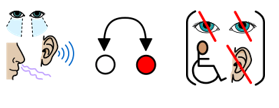 Children and young people might have a disability such as:
- a visual and/or hearing impairment
- a physical difficulty
They may find it hard to access a school because of their disability. This means they might need extra support or specialist equipment.
Children with Physical Needs are supported through liaison with our NHS Occupational Therapist, Physiotherapist and liaison with the Sensory Impairment Team. Care Plans are implemented and additional resources such as lap tops, foot rests, writing slopes etc are put in to place to enable pupils to access the quality first teaching within the classroom.
How to Support at Home
-
Sensory and/or Physical Needs (164.81KB)
Social, Emotional and Mental Health
 Children and young people might:
- find relationships difficult
- appear withdrawn or isolated
- behave in ways that affect their learning, for example, being disruptive
- do things that impact on their health and well-being
The school closely monitors and analyses both classroom and playground behaviour to ensure that the necessary support is provided where needed. The school runs targeted interventions to help support children develop their behaviour and ensure there is no interruption to learning. We communicate with parents and outside agencies to ensure a positive learning experience for every child, praising and rewarding good behaviour, which sets a high expectation across the school.
How to Support at Home:
-
Social, Emotional, Mental Health (372.51KB)
Children and young people might:
- learn at a slower pace than others
- find the curriculum difficult
- struggle with organisation and memory
- have a specific difficulty, for example, in literacy or numeracy
Support for learning difficulties may be required when children and young people learn at a slower pace than their peers, even with appropriate differentiation. Learning difficulties cover a wide range of needs, including moderate learning difficulties (MLD), severe learning difficulties (SLD), where children are likely to need support in all areas of the curriculum and associated difficulties with mobility and communication, through to profound and multiple learning difficulties (PMLD), where children are likely to have severe and complex learning difficulties as well as a physical disability or sensory impairment.
Specific learning difficulties (SpLD), affect one or more specific aspects of learning. This encompasses a range of conditions such as dyslexia, dyscalculia and dyspraxia. We work with our attached Educational Psychologist and other agencies to identify and support children’s learning. Please refer to out SEND Information report for more information.
How to Support at Home
- Cognitive and Learning (609.48KB)
Children and young people might:
- struggle to talk or say what they want to
- find it hard to understand what other people are saying
- find conversations and play confusing or challenging
Children with Speech and Language difficulties are supported in the classroom by additional adult support and strategies and guidance provided by our SENCo. The school has a positive and effective working partnership with our NHS Mainstream Speech Therapist who provides programmes and therapy to children within the school. In addition to this, the school provides speech and language support using the Nuffield early Language Intervention for children who meet the criteria.
Children who have been diagnosed with ASD or diagnosed with social and communication difficulties are supported through our SENCo, Speech and Language Therapist and through quality first teaching within the classroom.
View Hertfordshire Speech and Language Therapy (SALT) below, where you can access information about the three specialist SALT teams (Early Years, Mainstream, Hearing Impairment), including making a referral.
www.hct.nhs.uk/our-services/childrens-speech-and-language-therapy/
Please take a look at what the teams can offer, and to access information and support. We hope all parents/carers make full use of this service.
How to Support at Home
- Communication and Interaction (171.60KB)
Children and young people might have a disability such as:
- a visual and/or hearing impairment
- a physical difficulty
They may find it hard to access a school because of their disability. This means they might need extra support or specialist equipment.
Children with Physical Needs are supported through liaison with our NHS Occupational Therapist, Physiotherapist and liaison with the Sensory Impairment Team. Care Plans are implemented and additional resources such as lap tops, foot rests, writing slopes etc are put in to place to enable pupils to access the quality first teaching within the classroom.
How to Support at Home
- Sensory and/or Physical Needs (164.81KB)
Children and young people might:
- find relationships difficult
- appear withdrawn or isolated
- behave in ways that affect their learning, for example, being disruptive
- do things that impact on their health and well-being
The school closely monitors and analyses both classroom and playground behaviour to ensure that the necessary support is provided where needed. The school runs targeted interventions to help support children develop their behaviour and ensure there is no interruption to learning. We communicate with parents and outside agencies to ensure a positive learning experience for every child, praising and rewarding good behaviour, which sets a high expectation across the school.
How to Support at Home:
- Social, Emotional, Mental Health (372.51KB)
Further Details
Further information about Inclusion and SEN can be found on our website as follows:
- SEND Websites
- Hertfordshire SEND Provision
- DSPL9
- How to decide on the right school for a child with SEND
- Hertfordshire SEND Documents and Resources
- Appendices to SEND policy (213.55KB)
- SEND information report (355.69KB)
- SEND and Inclusion Policy (426.37KB)
- Accessibility Plan (285.17KB)